
Repository systems and product libraries
Save a design system with the repository that owns its implementation. Tokens, components, pages, assets, contracts, fixtures and rules belong in reviewable project files, not only an extension database.
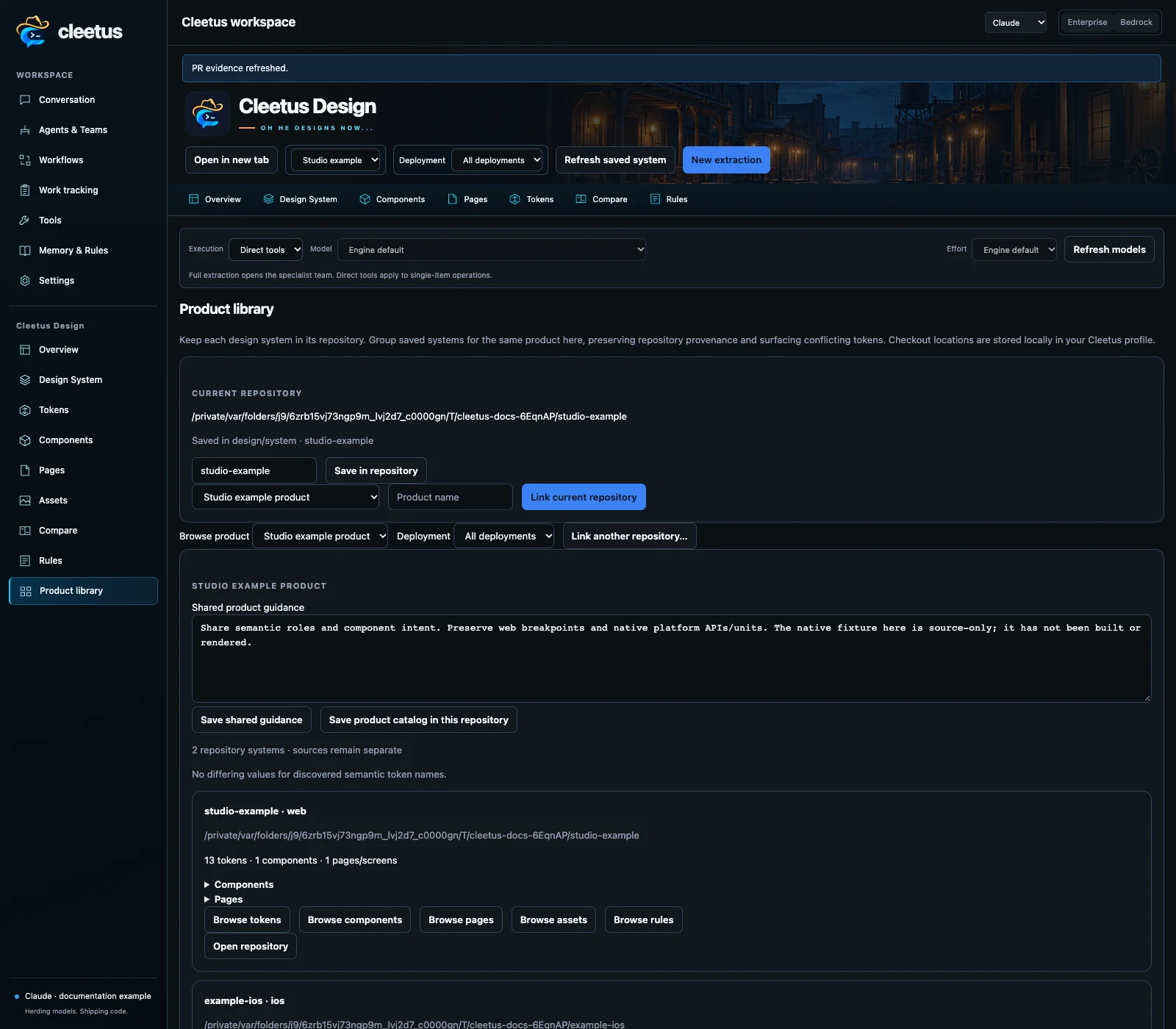
A product library connects several repository systems for one product: for example, responsive web, iOS and watchOS, followed later by Android. Cleetus remains product agnostic; users supply their own repository/product identities.
A practical workflow
- Extract and curate each repository's design system.
- Identify its deployments/platforms and register actual previews.
- Link related checkouts into a product library.
- Review shared token semantics, component roles, platform differences and rules.
- Give agents the relevant implementation contract and repository context before adoption.
- Commit intended project artifacts and review updates across affected repositories.
Machine checkout links are local. Portable library snapshots can be committed without absolute machine paths; relink the checkouts after cloning. A library does not automatically synchronize source, publish packages, rewrite consumers or erase platform differences.
Use impact/usage context before changing a reusable component. Review its stories and consuming pages, then explicitly update/test the applications that adopt it. This is how the library becomes reliable agent context rather than a stale file inventory.